
How Device Programming Empowers the Music Industry
When music and technology intersect, innovation takes center stage. Behind the scenes of modern sound amplification, effects processing, and digital production lies a critical enabler: device programming. From guitar amplifiers to digital audio workstations, precisely programmed integrated circuits (ICs) are redefining how music is created, performed, and experienced.
Amplification Perfected Through Device Programming
At the heart of electric guitars, keyboards, microphones, and amplifiers is the ability to faithfully amplify sound. This process is governed by integrated circuits that control signal gain, tone shaping, and output stability. Through advanced device programming, these ICs are finely tuned to ensure that even the most delicate input—a soft guitar strum or a subtle vocal inflection—is amplified cleanly and accurately.
By optimizing amplifier ICs, manufacturers achieve greater signal integrity, reduced noise, and consistent tonal performance. The result is powerful, authentic sound reproduction that preserves the artist’s original intent.
Customized Soundscapes with Guitar Pedals and Effects
Iconic guitar tones are rarely accidental. Guitar pedals and effects processors rely on highly specialized ICs to shape sound—producing everything from lush reverbs and ambient delays to aggressive distortion and modulation.
Device programming allows these pedals to be calibrated with exceptional precision, enabling musicians to tailor effects to their exact preferences. This customization transforms pedals into creative instruments themselves, offering artists a dynamic and expressive palette of sounds at the tap of a foot.
Reliability and Power Stability on Stage and in Studio
For musicians, power instability can be disastrous. Voltage fluctuations, surges, or inefficient power regulation can introduce distortion—or worse, cause equipment failure during a performance.
Properly programmed ICs play a critical role in power management across amplifiers and effects units. By maintaining consistent voltage regulation and monitoring power conditions in real time, device programming enhances reliability, protects sensitive components, and ensures uninterrupted performance in both live and studio environments.
Open-Source Innovation Meets Audio Hardware
Open-source innovation is no longer limited to software. In the music industry, open-source firmware and hardware platforms—combined with flexible device programming—are enabling communities of engineers, musicians, and audiophiles to collaboratively improve audio equipment.
From customizable guitar amplifiers to modular synthesizers, open-source ecosystems allow continuous refinement of sound quality, feature sets, and performance. Device programming serves as the bridge between creative experimentation and reliable, production-ready hardware.
Efficiency, Longevity, and Sustainability
Precision device programming extends beyond sound quality—it directly impacts product lifespan. Optimized IC behavior reduces thermal stress, minimizes unnecessary power consumption, and prevents premature component wear.
For amplifiers, pedals, and audio interfaces, this means improved durability, lower failure rates, and longer usable life. The result is greater sustainability and better long-term value for manufacturers and musicians alike.
How Else Does IC Programming Impact the Music Industry?
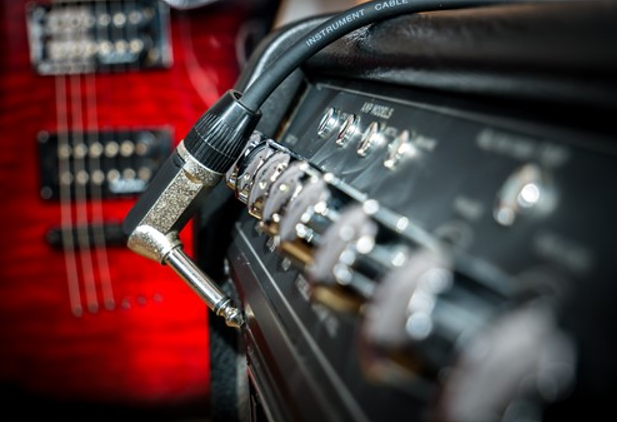
While amplification is a foundational use case, IC programming influences nearly every aspect of modern music technology:
Digital Audio Workstations (DAWs)
IC programming optimizes sound cards and audio interfaces, enabling real-time processing, low latency, and high-fidelity playback across multiple tracks.MIDI Controllers and Instruments
Precisely programmed ICs ensure accurate, responsive transmission of musical data—capturing subtle performance nuances from keyboards, drum pads, and controllers.Sound Synthesis and Drum Machines
Modern synthesizers use IC programming to generate, modulate, and shape waveforms, enabling everything from vintage emulation to entirely new sonic textures.Digital Signal Processors (DSPs)
DSP chips rely on IC programming to perform critical tasks such as equalization, compression, filtering, and reverb with speed and precision.Smart Assistants and Voice Recognition
Voice-controlled systems in studios and live environments use programmed ICs to process commands accurately, enabling hands-free workflow enhancements.Noise Cancellation Technology
Active noise-canceling headphones depend on real-time IC processing to analyze ambient sound and generate precise counter-frequencies.Wireless Audio Transmission
Bluetooth speakers and wireless headphones use IC programming to encode, transmit, and decode audio with minimal latency and signal loss.Audio Storage and Playback Devices
From MP3 players to streaming hardware, IC programming ensures fast access, smooth playback, and consistent sound quality.Lighting and Stage Effects
Synchronized lighting and visual effects rely on programmed controllers to align perfectly with musical timing, enhancing the live audience experience.
The Strategic Advantage of Outsourcing Device Programming to ProEx
For music technology manufacturers, outsourcing IC programming to ProEx provides a clear strategic advantage. ProEx delivers deep technical expertise, robust quality systems, and scalable programming solutions that ensure audio devices perform at peak efficiency.
By partnering with ProEx, companies benefit from:
Superior sound quality and device reliability
Faster turnaround times for product launches and updates
Reduced internal engineering and production costs
Consistent, high-quality programming across product lines
This allows music industry innovators to focus on design, creativity, and market growth—while trusting their technology backbone to proven experts.
In the grand concert that is the music industry, device programming may not stand under the spotlight—but it conducts the entire performance. From pristine amplification to immersive digital experiences, it ensures every note is delivered with precision and impact.
Contact ProEx today to learn how expert device programming can elevate your music technology solutions.
October 31, 2023
